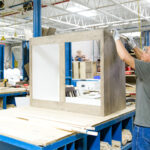






Many housing markets are constrained by supply limitations, schedule uncertainty, and cost variability. Manufacturing principles—repeatable processes, throughput planning, and quality discipline—can support more scalable housing delivery models.
The Core Problem: Supply, Speed, and Variability
Housing delivery is challenged by:
These constraints create compounding delays and cost instability.
What Manufacturing Changes
Manufacturing environments are designed around:
Applied to housing, these principles can reduce variability and improve predictability—especially at scale.
Scale Requires Repeatability
When production must increase, repeatability matters. Systems that rely heavily on unique conditions and variable crew execution are harder to scale without friction. Manufacturing supports scale by building repeatable processes that can increase throughput with better predictability.
Quality Discipline and Consistency
In scalable delivery models, consistency is not optional. Quality discipline requires repeatable checks and defined standards—implemented during production, not only at the end.
Why “Factory-Built” Is Not “One-Size-Fits-All”
Factory-built does not mean a single product for every use case. The value is in controlled production and predictable execution, while configurations and deployment strategies can still vary across:
How Stakeholders Engage the Right Way
Factory-built housing works best when stakeholders engage through the correct channels: